
Science glimmers: issue 2
The moon, volcanoes, new species, pain, carbon...and thoughts from me.

From the time I became a mom, I’ve always told my kids, “I love you to the moon and back with all of my heartbeats.” So this week, my whole family is loving following the Artemis 2 news. As my newly minted 7-year-old put it: when they say “I love you to the moon and back,” they mean it for real. It’s making the phrase hit differently for all of us.
Watching the mission unfold has been incredible. Seeing so many people come together to follow the journey of these four humans to the moon makes me hopeful and sad. Hopeful because of what’s possible. Sad because I wish we could come together more often.
This is one powerful example of what science can do. Science, at its best, gives us insights, hope, awe, joy, and so much promise. How can we inspire this type of awe more often? I’m not sure of the best way, but I’m inspired to figure it out. (Read to the end for more of my moon thoughts.)
So this week, I’m leaning into the joy and hope that science can bring with another issue of Science Glimmers (issue one is here). Below I give four high level overviews of science news that caught my eye and gave me some hope.
Early warning for volcano eruptions
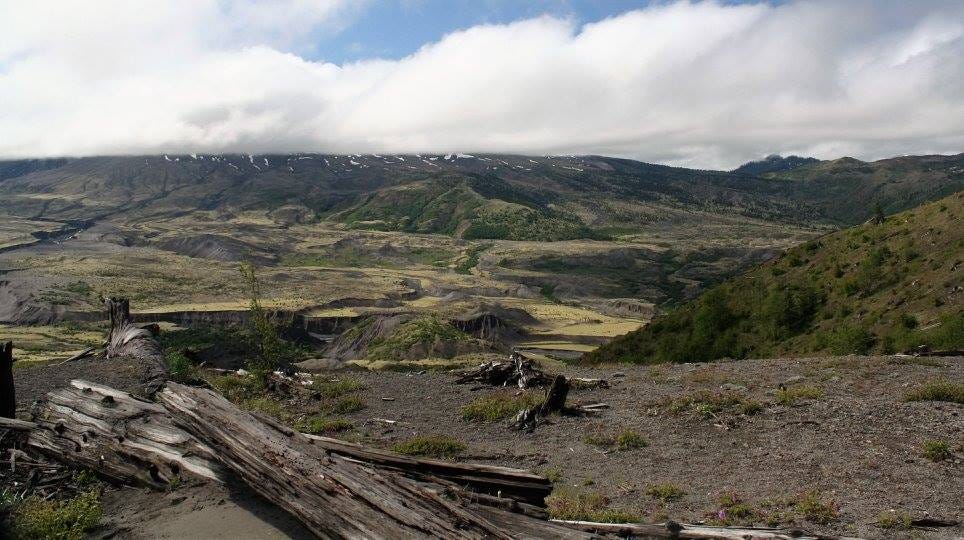
My husband and I had the chance to explore some of Mt. St. Helens in 2016. That’s why this newest paper initially caught my eye. While visiting, I was struck by the power contained underneath the surface and the potential devastation a volcano can bring when it erupts. So, if you live or work near one, being able to detect when an eruption might happen can be lifesaving.
Scientists have developed a new method called “jerk” that detects very small ground movements that can warn of rising magma (the hot, melted rock that eventually shoots out of a volcano). Their method uses a single seismometer, which is a device that detects ground movement. Their jerk method is focused on very small, temporary shifts in ground movement that have been previously ignored and thought to be not significant or due to errors in monitoring set-up.
They weren’t mistakes though, and studying these overlooked shifts, the research team developed an automated early warning system. The results were impressive: it accurately predicted 92% of 24 eruptions that occurred at Piton de la Fournaise.
While more studies are needed before wide implementation, I thought this provided a nice illustration of how scientific advances can come from unexpected, and sometimes overlooked, places.
Twenty-four new deep sea creatures
It’s easy to forget how much we still don’t know about the creatures that live on earth, but this new paper helped remind me!
A team of scientists worked together to identify and describe different types of shrimp-like creatures (officially known as amphipods) gathered from the Clarion-Clipperton Zone, an ocean area lying between Hawaii and Mexico. It is an ecosystem we know very little about.
From their work, they identified 24 new species across 10 different families of amphipods. They even found a whole new branch that will eventually need to be added to the tree of life (both a new family and superfamily). This is a big deal because these are the ways we categorize life, and they found a whole new category!
They also found some types of these creatures living deeper in the ocean than we previously thought possible. This is all really neat stuff.
Oftentimes we think we know all there is to know, but findings like this remind me that one of the best parts of science is that it helps us discover things we maybe never even thought to wonder about.
Hope for chronic pain
I can’t pretend to understand the challenges faced by people who experience daily chronic pain. What I do know is that we need more options to help them that don’t carry high risks of side effects and addiction.
That’s why a recent paper on gene therapy for pain relief gives me hope. It was done in mice, so a lot of work still needs to happen before this could ever reach humans, but it gives us new avenues to explore.
In this paper, scientists studied how chronic pain affects the brain of mice following nerve injury and how morphine modifies brain signals to block the sensation of pain. They then created a gene therapy targeting the neurons normally affected by morphine. The gene therapy can be activated by administering a chemical into the brain, mimicking morphine’s pain-relieving effect without the risks of morphine itself.
These are early results, and more research is needed to see if this could work in humans. The team is hoping to eventually bring this to clinical trials. This is an example of the kind of work that could really change lives for the better, but we need to continue investing in it.
Capturing carbon dioxide for climate change
As someone who lives on the coast of Maine, I often wonder and worry about what the future here looks like due to climate change. That’s why a recent paper caught my attention.
One way for us to help mitigate the rate of climate change is to reduce the amount of carbon dioxide in our atmosphere. This approach is called “carbon capture”: reducing the carbon dioxide that enters the atmosphere or removing what’s already there. This is a great idea in theory. Some current methods use solutions or carbon materials to try to capture carbon dioxide. The problem has been that it is very hard and expensive to make these work well in practice.
A team based out of Japan has tried to tackle this problem by creating a new type of carbon material they’ve called viciazites. This material seems to be effective at capturing carbon dioxide and looks like it can be reliably made.
While not in use yet, this is really cool progress. Next steps would be to continue testing this and find ways of implementing it at scale.
Knowing that there are scientists working on creative solutions to climate change gives me real hope.
What can you do?
Science, gives us hope, but that ability of the U.S. to contribute to things like this depends on continued support.
Just in the last week, President Trump has released his proposed FY26 budget, and it includes more proposed cuts to federally funded science in the U.S.
If you care about science funding in the U.S., please let people know: Share stories about the benefits of science, talk about how you see its value, and let your elected representatives know you care too.
The moon is a reminder
Finally, here are some words on my mind tonight, as I write this, after watching the lunar flyby. May we all remember the things science gives us, and what’s possible with hope and hard work.
I look up at the moon tonight, and I see it differently.
I see four souls who have gone further than anyone before them, to see what no human eyes have ever seen before.
And they remind me what we, and science, are capable of.
Science carried them to the moon, but it also carried Ben past the year he wasn’t supposed to see. It’s given someone’s daughter options for a diagnosis that once meant goodbye. It’s allowed someone’s son to walk out of a hospital that couldn’t have saved him twenty years ago.
It lets us all hold a small glowing phone and watch, in real time, four humans floating in space 238,000 miles above our heads.
It brings us planes that can lift us off the ground and land us safely somewhere hours later.
So I look up at the moon tonight and I see proof that hope can become real when we care enough and work hard enough, together.
And that combination could be enough to change everything.
Love,
Liz
You can become a paid supporter of this substack or you can make a one time contribution of support here.

Thank you for this. Much needed.
I really like the short blurbs! Outside of my discipline I can't spend the time learning everything about everything. Nice, thank you!