
From top-down to wagon wheel
The Next Era of Vaccine Governance with Patsy Stinchfield

If you’re new here, welcome. If you’ve been reading along for a while, thank you, and get ready for something a little different today.
This is the first of my contributions in a series of conversations about what the next era of vaccine governance and communication could look like. Members of The Evidence Collective will be talking with clinicians, scientists, policymakers, leaders, parents, and community members: the full range of people who shape and live with vaccine policy in the U.S. Hopefully, some conversations will confirm things that many readers already believe, and others will challenge them. Both are critical for us to find new ways forward. The work is part of a complementary effort with the Vaccine Integrity Project. You can find all interviews here, and you can fill out this form if you’re interested in being interviewed for this series!
Patsy Stinchfield started her career as a pediatric nurse practitioner at Children’s Hospital of St. Paul in 1987, and within a few years found herself in the middle of a national measles outbreak that killed over 100 children, three of them in her city, two of whom died in her own hospital. These children had numerous medical interactions in the months before they died and could have been vaccinated at any one of them. That failure has shaped almost everything Patsy has done since.
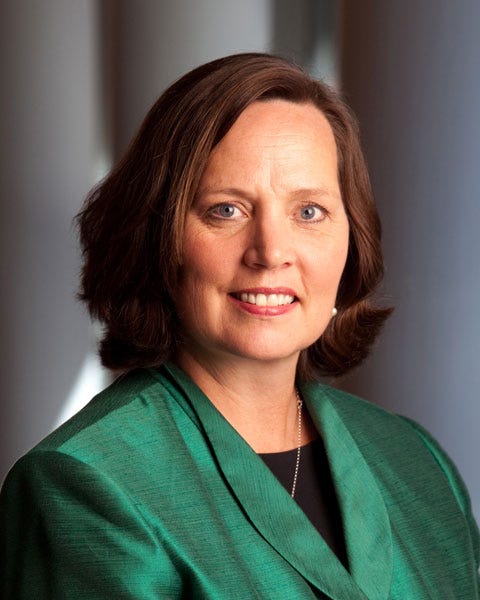
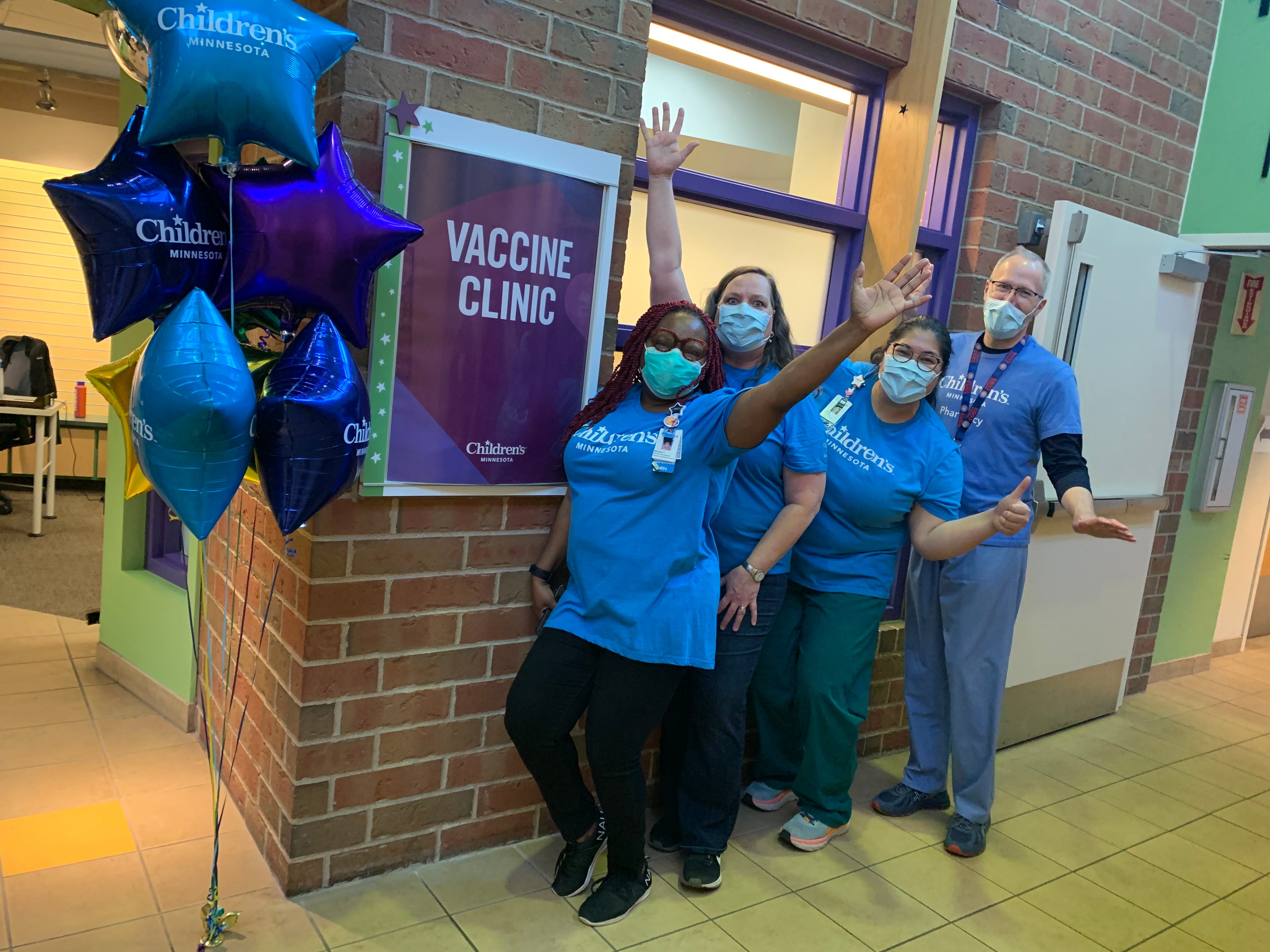
Patsy has decades of experience in direct patient care in infectious disease and immunology, specializing in vaccine-preventable diseases. She was the first nurse voting member ever seated on the Advisory Committee on Immunization Practice (ACIP)*, from 2004 to 2008, and remained a liaison until 2023, representing the National Association of Pediatric Nurse Practitioners. She ended her career at what became Children’s Minnesota, leading the organization through the COVID pandemic as Senior Director of Infection Control while simultaneously contributing to multiple COVID vaccine ACIP calls per week. She also shared her expertise through volunteering for sixteen years, including as President at the National Foundation for Infectious Diseases (NFID).
I wanted to talk with her because she has seen so much and has a perspective that I think we can all learn from as we envision what the future looks like for vaccine communication and policy in the United States. She’s witnessed kids die from vaccine-preventable illnesses, she’s had conversations with concerned parents, and she’s seen the ACIP operate from the inside. She is willing to say what worked and what didn’t so we can learn and go forward into something better together.
We had a great conversation that you’ll get to read a snapshot of below, but two things have really stayed with me.
Her suggestion to rename ACIP something like the Communicable Disease Prevention Board. She thinks a focus on preventing infectious diseases broadly will show the public that we don’t just care about vaccination, but about preventing diseases that can have severe consequences for families. Vaccines are a critical part of this process, but things like air handling and hygiene matter too, especially in pandemic times. Regardless of scope, she believes the ACIP name should be retired to mark a new way forward.
Her illustration of a new vaccine policy ecosystem that is shaped like a wagon wheel instead of the usual top-down approach.
I also really appreciated her willingness to acknowledge that we need to change the way we communicate and reach people for this new information ecosystem.
*For those not familiar, the Advisory Committee on Immunization Practices makes recommendations to the CDC for how a vaccine should be used once it has been approved by the FDA.

Below is our conversation, lightly edited for length and clarity.
Elisabeth: There’s a lot that has happened over the last year and a half in the world of U.S. vaccines. What are some of the most serious long-term risks from these current disruptions?
Patsy: I don’t think we can overstate how much of a crisis we are in right now. The health of American children and the health of American society are very much at risk. This time is very tenuous, serious, urgent, and I would consider it a public health crisis.
Have you already started seeing some of these downstream effects in your work?
We’re all seeing it in the rise of measles. It is not under control. I’ve taken a temporary position as the Executive Director of NFID’s Measles Collaborative to help steer new interventions towards an old problem, one we had eliminated.
We know vaccine-preventable diseases like measles can have severe or fatal outcomes. That’s why we vaccinate. And the majority of parents still vaccinate their kids on time. But, we also have a population of parents who are just so confused and have heard so many conflicting things. They just don’t know who to believe, so they throw up their hands.
That’s now combining with a population of young clinicians who never expected to have to manage the resurgence of these vaccine-preventable diseases. So we have lost evidence-based governance, have a less-than-optimally prepared base of clinicians, and a really confused set of parents.
I fear that we’re going to get inertia and that these pathogens are going to win.
What do you think is driving some of this erosion in trust of vaccines?
There’s a lot going on, including loss of trust and confidence in entities overall.
People have lost trust in the government. Some see vaccines as an extension of government because of school entry requirements and because they’re approved by the CDC. We’ve lost trust in public health. You know, don’t make me wear a mask, don’t make me stay home, and what was that six feet all about? COVID eroded a lot of confidence.
Then there are organized and loud voices that are not evidence-based, and they are finding confused followers who end up trusting their mis- and dis-information.
Then, the people in government, in science, in academia, in clinical medicine, and in nursing are all exhausted from having the same vaccine conversation multiple times a day. So they lose patience, come across as cold, and it becomes a self-fulfilling prophecy.
Together, all of these factors produce what we are experiencing today.
So, what are some solutions that you think could help right now?
There’s a long and a short game here. The big picture is that we have to rebuild trust, and trust takes time. Trust is earned, and you earn trust by showing up, being seen, being consistent, being trustworthy. People will trust you when you help make their lives better. That takes time to achieve, but there are things we can do to work towards it.
First, we have to change the timing and setting where these conversations happen, and we have to change the messengers and the methods of our communication. We just can’t keep trying to communicate about vaccines in five minutes or less right before the vaccine administration. That is trying to fit a square peg in a round hole. It is just not going to fit. We also have to communicate with people earlier, like as soon as they get pregnant, before disinformation reaches them. We have to listen first. These conversations need to be two-way and with plenty of time to absorb, ask questions, and really communicate.
Second, we need to work with messengers the public sees regularly and already trusts, like school nurses or their local pharmacists.
Third, we need to invest in science education and critical thinking starting with the earliest ages. We need to help kids and adults learn about science, how to critically evaluate information, and how bodies work.
What are your thoughts about what worked well for the ACIP, given you served on the committee for many years?
The ACIP really was an excellent, internationally recognized resource. We regularly had people from all over the world attend to learn how we transparently made public policy, engaged the community, and worked within a framework of interdisciplinary decision-making. So, I don’t want to throw ACIP all the way out; it was a very good model.
The things that were really strong were the science reviews. We rigorously evaluated the available evidence to make recommendations through workgroups of subject matter experts. We also had a strong model of co-leadership. You had someone who really knew the rules of order and the ins and outs of CDC. They would call things out and keep us on track. But then they also partnered with a well-respected clinical expert who’s really gifted at helping lead a conversation. I think that model was good.
I also think having voting members with a variety of expertise was good, and the representation within the members improved over the years. The interdisciplinary nature is really critical, and the liaisons representing various organizations were there and could help answer questions.
We know it isn’t perfect though, so what do you think ACIP could do to improve?
One is it’s a little bit academia-heavy, and I think we need more practicing clinicians, nursing, and pharmacy voices there. We need more people who know what the implications of the decision will be for their practice, for their patients, etc.
But our biggest failure, in my opinion, was that we could have done a much better job communicating to the public about what we do, who we are, and what we were actually discussing – before, during, and after our meetings. We should produce plain-language summaries and help flood the zone with true information.
We also could improve by supporting implementation, which was not in the charter. So when I brought that up, it wasn’t discussed. We advised, then the CDC director approved, and then it got turned over to the states. All 50 states then had to come up with a plan, for example, for COVID vaccines. I really felt like our fragmented implementation was fraught with problems because of social media. People get confused when their sister-in-law in Texas can get the vaccine, and they can’t in Minnesota. The different policies just cause utter confusion. So I do think there needs to be an implementation arm of ACIP that works with states, associations, and other groups.
I also think we should reframe the committee to focus on preventing infectious disease. We’re not trying to just promote vaccines. We’re trying to prevent infectious disease, but that’s not how it comes across to some of the public. We could include recommendations around hand hygiene, testing, masking, air handling, etc., in these conversations around vaccines, so people can see them as one vital aspect in an overall system focused on preventing infectious disease. These specialists exist at CDC and in hospitals, so it would be a reorganization promoting collaboration rather than siloed work.
What might a new model of vaccine communication and recommendations look like?
It can’t be top-down like it always has been. I’m thinking perhaps we envision it more like a wagon wheel, where the science is in the center, and all of the spokes radiate outward as equal partners rather than a chain of command.
Around that hub sit a public or community representative, public health officials, practicing pediatricians and other frontline clinicians, vaccine scientists, communication experts, and implementation scientists. None of them outranks the others, and the decision gets shaped by everyone on the wheel.
This matters because it catches mismatches that pure science can miss, like proposing a vaccine at three months of age when the standard well-child schedule doesn’t even include a three-month visit. A clinician or an implementation scientist catches that instantly; a room of research scientists alone might not. The goal isn’t to weaken vaccine research. It’s to stop treating it as the only voice that gets to decide how, when, and to whom a recommendation actually reaches.
If you had to prioritize one or two things over the next few years, where would you focus first as a community?
The first is transparency. We need to own our mistakes without defensiveness and be clear about what we learned and how we will try to prevent those same mistakes from happening again. So I would start with transparency about where we’ve come from, where we are now, and where we as a community want to get to.
I do think it would be wise to say we’re not going to just go back to the way ACIP was. There are definitely some things that were fantastic and internationally recognized about that group, and we’re going to keep that. But there were some things that we could have done better, and we’re going to look at those. No shame. No blame. Just agreement on being the best we can be.
What is giving you hope right now?
I’m so appreciative of the many amazing people who have stepped up and filled the gaps and supported this work with advocacy, legal monitoring, data interpretation, funding, collaboration, public/private partnerships, toward a disease-prevention system that is evidence-based and inclusive of the community and multiple disciplines, like the Evidence Collective, Vaccine Integrity Project, and the Measles Collaborative. I’m also finding hope in the many people who are building new ways of reaching people where they are – on social media and in communities. We have to reach people where they are in a way that works for them, not just for us.
The Next Era of Vaccine Governance series is being done in collaboration with The Evidence Collective and is part of a complementary effort with the Vaccine Integrity Project. If you would like to share your perspective with us as part of this series please fill out this form.
You can become a paid supporter of From the Science Classroom or you can make a one time contribution of support here.
Good to get the perspective from someone with her experience and knowledge! And good for you! You are one of the people who has stepped in to try and fill that information gap, and it is helpful, and appreciated 👏🏽 💕